
AI Technology in MLB Betting: Automated Data Tools
 Available in US
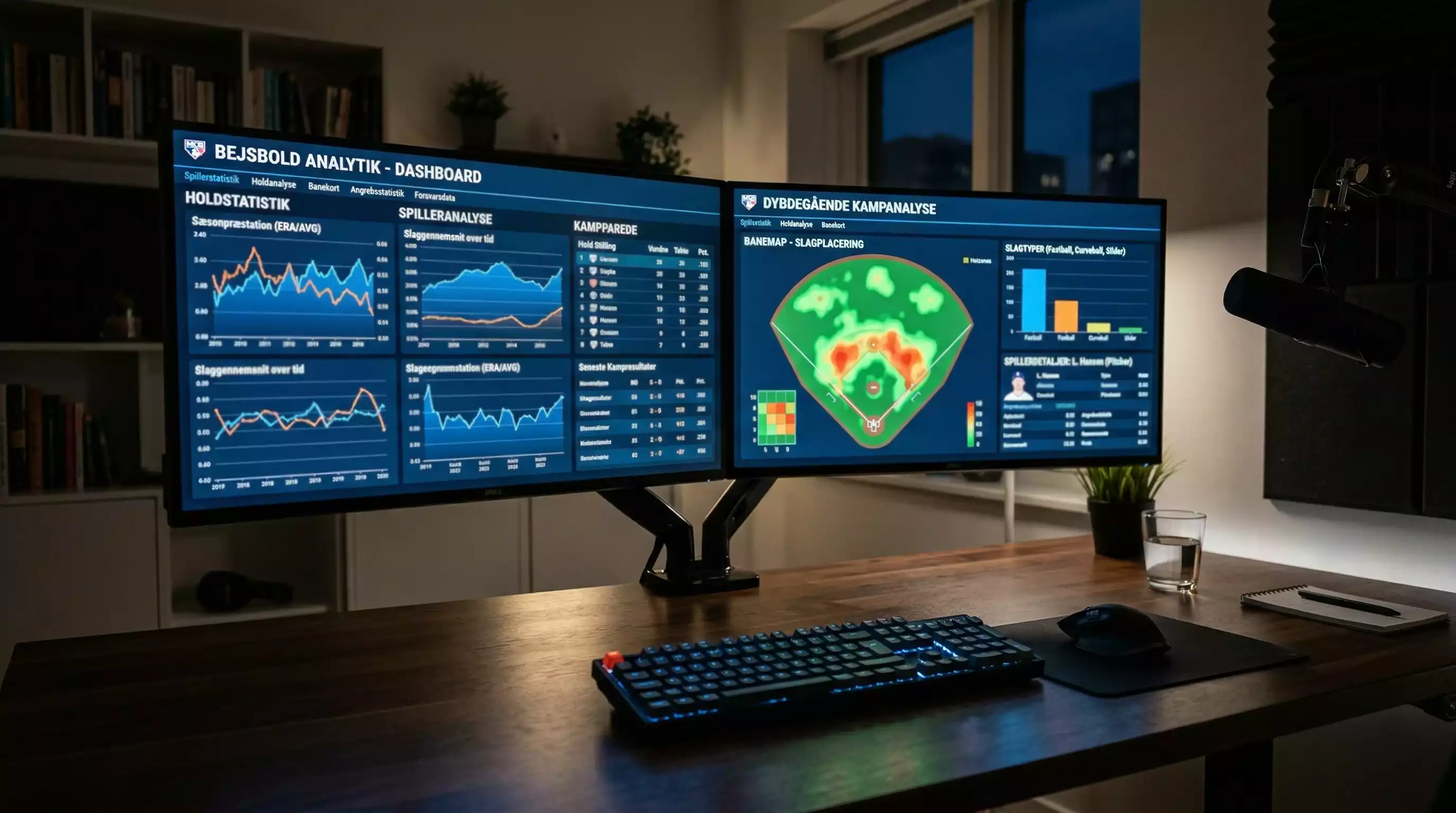
Evaluating Automated Data Tools for MLB Betting
Five years ago I could find mispriced MLB lines by pulling FIP data from a free website and comparing it to the moneyline. That edge still exists, but the window has narrowed from hours to minutes. The reason is technology. Sportsbooks now deploy machine-learning models that ingest Statcast data, weather feeds, injury reports, and lineup confirmations in real time. The lines adjust faster, the prices are sharper, and the casual analytical advantage that used to separate informed bettors from the public has been compressed by automation. The question is no longer whether AI has changed MLB betting – it is whether individual bettors can still find room to operate.
AI-driven tools have increased user engagement on betting platforms by up to 25% compared to platforms without those features. That statistic captures the operator side of the equation. On the bettor side, the same underlying technology – machine learning, real-time data processing, automated modelling – is increasingly accessible to anyone willing to invest the time to learn it. The arms race is not between humans and machines. It is between those who use the machines and those who do not.
AI on Betting Platforms: Engagement, Personalisation, and Risk
The 25% engagement lift from AI tools is driven by personalisation engines that recommend bets based on a user’s history, push notifications timed to live-game moments, and same-game parlay builders that use algorithms to suggest leg combinations. These features are designed to increase volume – more bets, more frequently, on more markets. For the operator, that translates directly to revenue. For the bettor, it translates to risk.
Ninety-five percent of online gambling in the UK happens from home, and the 18-to-24 age group shows the highest rate of mobile betting at 76%. AI-powered personalisation meets these users on their phones, in their living rooms, with suggestions tailored to their browsing behaviour. The convenience is genuine, but so is the danger of impulse betting driven by algorithmic nudges rather than analytical conviction.
I use platform AI features selectively. The odds comparison tools are useful – they aggregate prices across markets and flag the best available number. The bet suggestions, I ignore entirely. No platform algorithm knows my model’s probability estimates, my park-factor adjustments, or my umpire overlays. The suggestions are designed to maximise platform revenue, not my expected value. Treating them as anything other than marketing material is a mistake I see recreational bettors make constantly.
Machine Learning Tools Available to Individual Bettors
Kyle Boddy, founder of Driveline Baseball and a special advisor to the Red Sox, has pushed the frontier of baseball analytics by exploring simulation models that use machine learning and artificial intelligence to map the full range of possible mechanical outputs in pitching. That kind of computational approach was once the exclusive domain of well-funded front offices. It is now accessible – in simplified form – to individual bettors with basic coding skills and free data access.
The most practical ML tool for individual bettors is a classification model that estimates win probability based on historical game data. Using freely available datasets that include starting pitcher metrics, team offensive stats, park factors, and bullpen quality, you can train a model that produces probability estimates competitive with commercial products. I built my current model in a standard data-science environment using three seasons of training data and basic gradient-boosted trees. It is not cutting-edge by Silicon Valley standards, but it outperforms eyeball analysis and generates consistent closing-line value.
For bettors without coding experience, several free and low-cost tools offer model-adjacent functionality. Projection systems available through public baseball analytics sites provide daily win probability estimates. Combining those projections with your own adjustments for bullpen fatigue, weather, and umpire tendencies replicates much of what a custom model does, without the technical overhead. The key insight is that you do not need to build the model from scratch – you need to know where the publicly available models are weakest and add your own edge on top.
Real-Time Data Pipelines: Statcast to Betting Model
All 30 MLB clubs maintain analytics departments that process Statcast data in real time. The same data – pitch velocity, spin rate, exit velocity, launch angle, sprint speed – flows through Baseball Savant and into the public domain with minimal delay. The gap between what the clubs see and what you can access has never been smaller.
The technological challenge for individual bettors is not data access but data integration. Pulling Statcast data, cross-referencing it with lineup confirmations, applying park-factor adjustments, and generating a probability estimate fast enough to act before the line moves requires an automated pipeline. I run a lightweight script every morning that pulls the day’s starters, their recent Statcast metrics, the opposing lineup’s wOBA splits, and the umpire assignment. The output is a ranked list of games with the largest discrepancy between my estimated probability and the current line.
The pipeline takes about 30 minutes to set up at the start of the season and runs in under two minutes each morning. It does not replace analytical judgment – I still review each flagged game manually before placing a bet. But it eliminates the tedious data-gathering step and ensures I am looking at the right games rather than the ones that happen to catch my eye on the broadcast schedule.
The bettors who will thrive in the AI era are those who combine automated data processing with human judgment that algorithms struggle to replicate: contextual reads on clubhouse dynamics, injury severity assessments that go beyond the official report, and the ability to recognise when a model’s assumptions have broken down. Technology is the amplifier, not the replacement, and the bettors who understand that distinction are the ones I expect to still be profitable five years from now.
For a complete guide to the data tools and platforms that feed these analytical workflows, the public betting percentages guide explains how to combine automated data with market-level signals for a comprehensive pre-game process.
AI in Betting FAQ
Can individual bettors realistically compete with AI-powered sportsbook models?
Yes, but the edge is narrower than it was five years ago. Sportsbooks use sophisticated models that incorporate real-time data, but they also face constraints that individual bettors do not: they must set lines for every game simultaneously, balance liability across thousands of accounts, and react to public money flows that may distort the true probability. Individual bettors can focus on a small number of games per day, apply situational adjustments that large-scale models handle loosely, and act on value before the line absorbs all available information. The competition is real, but the playing field is not as tilted as it appears.
How do AI tools increase engagement on MLB betting platforms?
AI-powered features increase engagement through personalised bet suggestions based on a user’s history, push notifications triggered by live-game events, and same-game parlay builders that recommend correlated leg combinations. These features are designed to increase betting frequency and average stake size. The 25% engagement lift reported across platforms with AI tools reflects the effectiveness of this approach. For bettors, the challenge is using the useful features – like odds comparison and line-movement tracking – while ignoring the suggestions that are optimised for operator revenue rather than bettor profitability.
Written by the editors at mlb Betting Statistics.