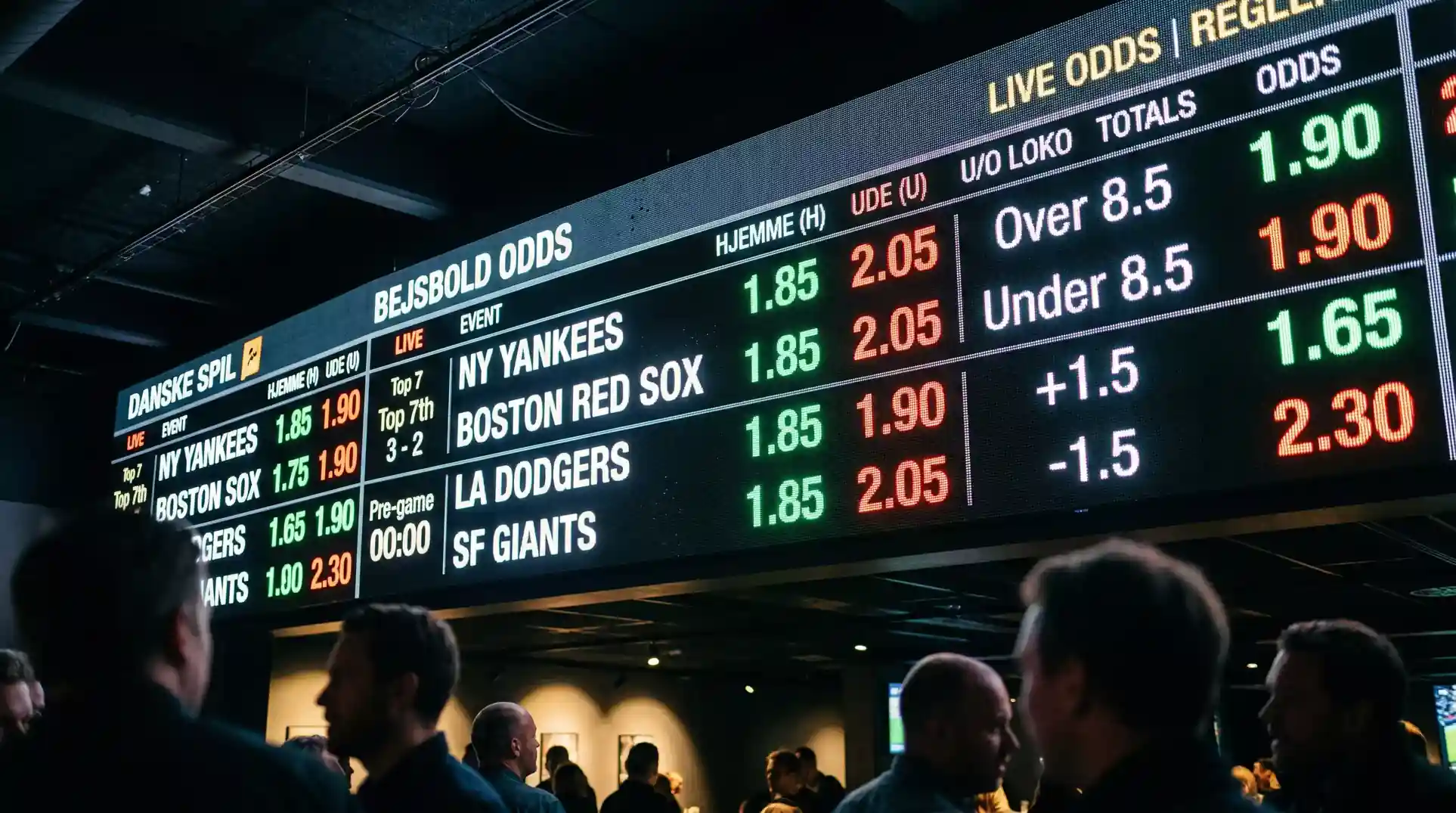
MLB Run Line Betting: Analyzing 1.5-Run Spread Odds
 Available in US

Evaluating Run Line Payouts on -1.5 Favorites
The first time I placed a run line bet, I backed a -200 favourite at -1.5 runs and got plus-money on a team I was already confident would win. It felt like free value. Then they won 3-2 and I lost. That one-run margin – the bane of every run line bettor – taught me that the 1.5-run spread is not just a pricing mechanism. It is a fundamentally different market that requires a fundamentally different approach.
In football and basketball, the spread moves with each game. In baseball, the standard run line is fixed at 1.5 runs for virtually every contest. What changes is the juice – the price you pay on each side. A heavy favourite might be -1.5 at -110, while a massive favourite could be -1.5 at -180. The fixed spread simplifies the structure but complicates the analysis, because the question is always the same: will this team win by two or more, or will the underdog keep it within one?
MLB favourites win roughly 58% to 62% of their games outright. But around 30% of all MLB games are decided by a single run. That means a significant chunk of favourite victories become run line losses, and the pricing must reflect that gap. Understanding when the gap creates value – and when it destroys it – is the entire game.
How Run Line Odds Are Set and Adjusted
Books set the run line price by starting with the moneyline implied probability and adjusting for the likelihood of a one-run game. If the moneyline implies a team wins 60% of the time, the book estimates what percentage of those wins come by two or more runs, then prices the -1.5 accordingly.
The adjustment is not uniform. Teams with powerful offences that score in bunches cover -1.5 at a higher rate than teams that grind out runs one at a time. A team that wins 60% of its games but does so with an average victory margin of 3.2 runs is a far better run line play than a team with the same win rate but an average margin of 1.8 runs. I track average margin of victory for every team because it is the single strongest predictor of run line cover rate.
Late-game bullpen quality also shapes the odds. A team with a dominant closer and setup corps protects multi-run leads more effectively, which means their -1.5 wins hold up. A team with a shaky bullpen can turn a 4-1 seventh-inning lead into a 4-3 final, converting what should have been a comfortable run line cover into a nail-biting one-run win. The books account for this, but not always precisely – and the imprecision is where value hides.
Backing Favourites at -1.5: When the Juice Is Worth It
Home underdogs won 45.9% of their games in the 2025 season, which means road favourites won about 54% of those matchups. Winning 54% of the time is profitable on the moneyline only at short prices, and run line -1.5 further narrows the margin. So when is backing the favourite at -1.5 actually worth the price?
My filters start with the starting pitcher matchup. If the favourite’s starter has a FIP below 3.50 and the underdog’s starter has a FIP above 4.50, the talent gap is wide enough to produce multi-run margins with some regularity. I then check the favourite’s offence against the opposing starter’s handedness, looking for a wOBA split above .340 – a threshold that suggests the lineup will produce runs in volume rather than in dribs.
Price matters enormously. A -1.5 line at -120 or shorter gives you reasonable room; the implied probability of covering is around 54%, and if your analysis puts it at 57% or better, the expected value is positive. A -1.5 at -170 or steeper requires the team to cover at roughly 63%, which is a high bar even for elite clubs. I avoid backing -1.5 at prices steeper than -150 unless the matchup is lopsided in a way that the market has not fully priced in.
Alternative Run Lines: Plus or Minus 2.5 and Beyond
Most sportsbooks now offer alternative run lines, and the +2.5 and -2.5 options create opportunities that the standard 1.5 cannot match.
Taking the underdog at +2.5 is a play I use when I like the underdog’s chances to compete but not necessarily win. If a road underdog is being sent out at +170 on the moneyline, the +2.5 line might price at -140 or so. The underdog can lose by two runs and still cash. In a sport where 30% of games finish within one run and another significant percentage finish within two, the +2.5 provides a cushion that dramatically improves the hit rate.
On the other side, backing a favourite at -2.5 is a high-risk, high-reward play that I reserve for extreme mismatches. If a Cy Young contender faces a back-of-rotation arm on a team with a bottom-five offence, the -2.5 at plus-money can offer genuine value. I have found these plays work best early in the week, when the book has not yet sharpened the line, and in games with totals set above 9, where the run environment supports larger margins. The frequency is low – I might find two or three of these per month – but the plus-money payouts make the patience worthwhile when the setup aligns.
For a deeper look at how the run line fits within the broader MLB odds structure – including moneyline mechanics, totals, and UK-specific odds formats – the odds explained guide covers every market from the ground up.
Run Line Betting FAQ
What percentage of MLB games are decided by exactly one run?
Approximately 28% to 31% of MLB games are decided by a single run in a typical season. This high proportion is the primary reason the run line is such a different market from the moneyline – nearly a third of all favourite victories become run line losses. The one-run game rate varies slightly by era and rule changes, but it has remained in this range consistently over the past decade.
When should a bettor choose the run line over the moneyline?
The run line offers better value than the moneyline when you are backing a heavy favourite. If a team is -180 on the moneyline, the -1.5 run line might be priced at -110, giving you a much more favourable payout for the additional risk of needing a two-run victory. Conversely, if you like an underdog but want a safety net, the +1.5 run line allows you to cash even on a one-run loss. The decision should always factor in the team’s average margin of victory and bullpen quality.
Written by the editors at mlb Betting Statistics.